Showing posts with label Sense of place. Show all posts

Sunday, January 17, 2016

Sacred Land

In reading fiction and non-fiction, I've felt there were commonalities between the histories and peoples of ancient Israel and Judah and the Navajo people. If Tony Hillerman's mystery novels can be relied on, some Navajo create sacred bundles containing stones, soil, and plants collected on pilgrimage to the four mountains that define the boundaries of their ancestral lands.

from israellycool.com
What would my sacred bundle contain? What are the major geographical features of Israel? (I'm revealing gross ignorance here.) The Negev, a huge desert in the south. The Mediterranean coast with cliffs and sandy beaches. Farmlands near the coast and in the Jordan Valley. The Dead Sea. The hills of the Galil and the Kinneret. The Golan Heights. Mount Carmel. The Mount of Olives. Mount Hermon.

It's obvious, even to me, that I lack basic familiarity with the Land. I'll start my studies with Wikipedia.

A pilgrimage through the Land of Israel would include sacred sites mentioned in Tanakh, places where the matriarchs and patriarchs camped and were buried, towns and cities of ancient Israel and Judah, places of worship in Beth El, Shilo, and Jerusalem. (It's time to re-read Tanakh with an eye to place.)

Where were the high places? How many bamot were in the Land? 

Here's a map showing the territories of each of the twelve tribes, including those outside the Land, on the east bank of the Jordan River.

I'm eager to learn more.

Ah... I should have followed my gut and left the Yeshivah of Rotting Pomegranates to explore Israel, meet more of its people, and master its language. But this will be better, because now I know why it's so important to know the Land that I belong to.

Tuesday, September 15, 2015

BaMidbar – In the Desert

5776. My first hopeful Rosh HaShana in over a decade. Recovery from something that I’ve never believed was traumatic enough to knock me on my ass. And yet, there I was, on my ass, and I couldn’t get up.

Why did “getting over it” have to take twelve years? At least it didn’t take forty!

There have been other signs of progress:

Months ago, I left my job and sold my house. Even though my plan to make aliyah was not working out, I entrusted myself to insecurity: it's a doorway, I hope, to a new life. I do not miss the house, only watching sunrise in the back yard, looking out at desert and mountains.

A few weeks ago, I visited Washington. Olympia seemed eager to press upon me many opportunities to build a full, new life. Those opportunities would have added up to a life I’ve already had. I want something else.

When I returned from Washington, I was overjoyed to be in the desert again. When did I become a lover of the desert?

I had thought that I missed abundant green and generous rains. In fact, I’ve learned to love bare earth, plants that thrive between rocks, bright flowers that appear for only a day, and clouds that are immense and fantastical landscapes in the sky.

I even love the tease of the monsoons: seeing a smear between cloud and horizon and knowing it’s raining “over there,” watching nearby rain evaporating before it reaches the ground, feeling three-minute long rolls of thunder, and waiting and hoping for rain to fall where I am.

Waiting and hoping. They feel good. And when the rain pours down: joy!

The knowledge that I have found my place is empowering. I am a toshevet midbar, a desert dweller. I will discover other parts of myself and, eventually, I will find my name.

There is no hurry. I want to take this journey.


Addendum: Tamara Cohn Eskanazi writes, "Wilderness is a place—or time—without orienting landmarks or structure." She asserts that the theme of B'Midbar (Numbers) is transition and that the book "charts the journey through a wilderness and attempts to create new structures in this intermediary space for future life in the land." 

Wednesday, September 2, 2015

This Is A Forest

I just returned from the Pacific Northwest, after exploring the possibility of living there. Everyone and everything was wonderful; I could picture myself as part of that community. However, the uniformly gray sky and the constant rain depressed me badly.

Returning to the Southwest made me ecstatic! 

Phoenix's 105 degrees made me laugh. During the early afternoon to middle-of-the-night drive home, I never took my eyes from the sky and horizon. That night, I gasped each time in-cloud lightning made a cloud visible in the black sky. And the first thing I did the next day was take a long hike. 

Just so you can understand my perspective...


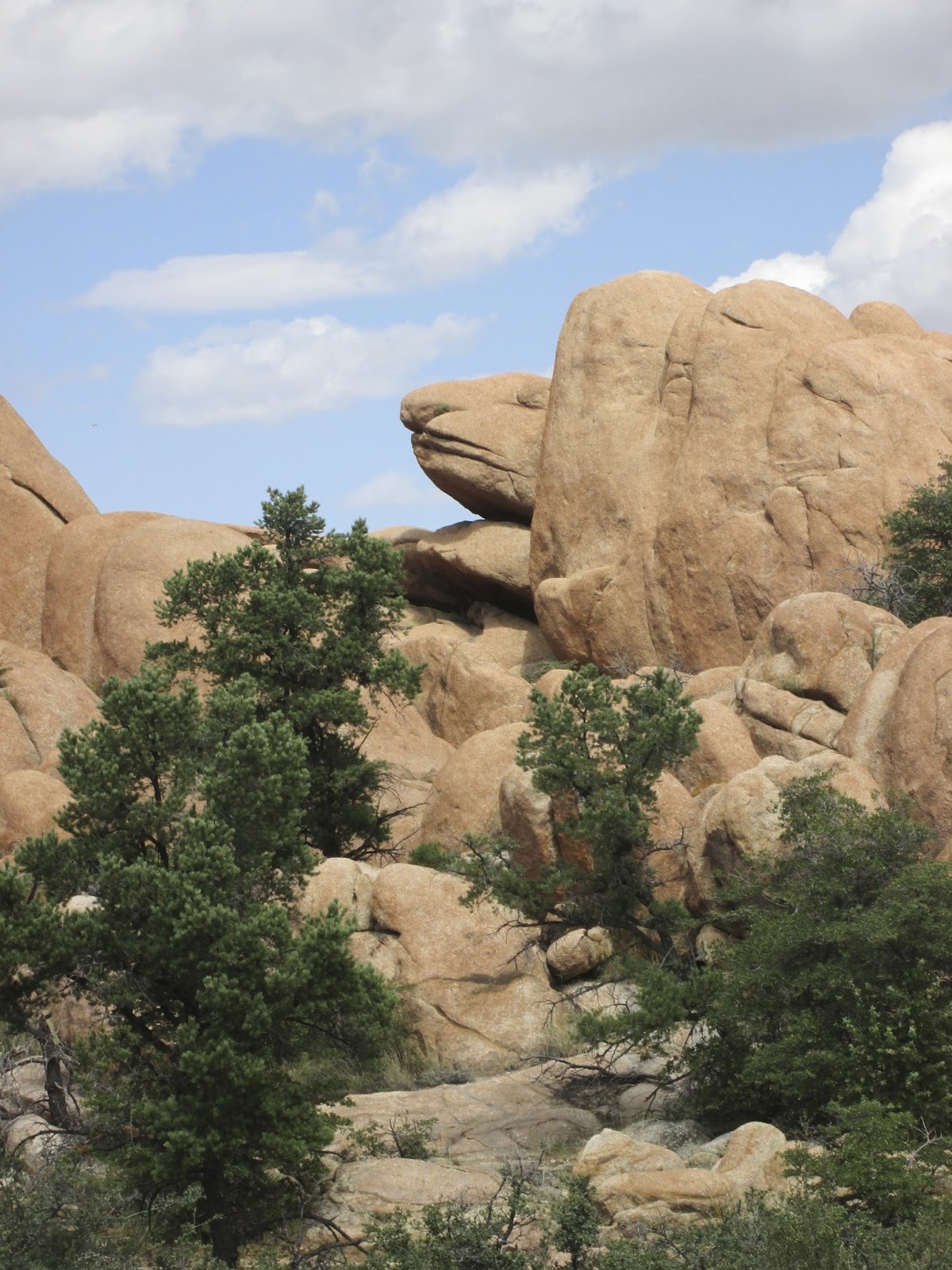
This is a forest:

These are clouds:


Tuesday, August 11, 2015

The Monsoons

hdcoloringpages.com/tag/arizona-2014-monsoon
The voice of Thy thunder was in the whirlwind;
the lightnings lighted up the world; 
the earth trembled and shook.

In the desert, we remember that rain is a blessing. Weather patterns have changed enough that, in the American Southwest, the monsoon season has become agony. We wait, gazing at the clouds or smears of rain in the distance, wondering when the winds, lightning, and brief, torrential rainfalls will touch us. Where are the storms and the rainbows? Where are the male and female rains?


Yesterday and today have been dark and wonderful! Even well dressed people take off their shoes and splash through water running in the streets. Thunder rolls again and again. People here are happy today.  I've been walking outside, listening to the thunder and letting the rain touch my face, lifting my hair so it would touch the back of my neck.

I tried to recall the blessings. (Thank goodness for Google.)

For thunder, the blessing is, "Blessed are You, Eternal One, ruler of the universe, for your strength and power fill the world." Baruch atah adonai eloheinu melech ha'olam shekocho u'g'vurato malei olam.

For lightning (and other natural wonders) we say, "Blessed are You, Eternal One, ruler of the universe, who makes the works of creation." Baruch atah adonai eloheinu melech ha'olam oseh ma'aseh v'reishit. 

And the unusually long blessing to be said when seeing a rainbow is "Blessed are You, Eternal One, ruler of the universe, who remembers the covenant, and is faithful to His covenant, and keeps His promise." Baruch atah adonai eloheinu melech ha'olam zocheir ha'brit v'ne'eman bivrito v'kayam b'ma'amaro.

Friday, December 27, 2013

Connection to the Land

I find myself saying that I belong *to* the Land, but I don't know what I mean. The preposition ‘to’ implies that the Land owns me...

In one of her posts on Sense of Place, Sterling also says that she belongs ‘to’ the Land. She suggests that she was brainwashed by Jewish day schools. I didn’t attend Jewish day schools. So what is the source of the connection I feel?

The absolute least likely reason is reincarnation, but I do have a strange story to tell.

Years ago, a friend and I decided to see a hypnotherapist for past life regressions. She was a believer; I was agnostic about reincarnation, but wondered what story I might tell.

The therapist struggled to get me to remember something. She kept taking me further down in her metaphoric elevator. Finally we found something.

Scene One: I was a man, a math teacher, in a small town in 1930s Germany. The boys I was teaching wore lederhosen. I was afraid of them-- one in particular-- because they all knew I was Jewish.

Scene Two: I lived in a single room in a brick building. My landlady cooked one meal a day for me. Sometimes, when sitting by my window, I’d see her hanging clothes out to dry.

Scene Three: I was wearing a grey coat and walking down an empty gray street in a city. (My body, the one in the therapist’s chair, felt huge, as if it had been inflated.)

Scene Four: I was lying on the deck of a large ship, very sick. It was daytime and a man was leaning over me. Someone shouted that he could see Palestine and men rushed to the side of the boat. I tried to sit up, but couldn't. I died a moment later, without even catching a glimpse of the Land.

After the hypnotherapist woke me, I thought, “It didn’t feel true.” And certainly, looking at the details, it couldn’t have been.

Did boys still wear lederhosen in the twentieth century? Would a Jew have walked down a German street during the World War II? Could a ship of refugees have approached the Land during daylight when the British had set up a blockade to prevent Holocaust survivors from reaching Palestine?

I couldn’t find any connection between my subconscious and the story I had told. (Of course, the nature of the subconscious is that you can’t really know it.)

Whatever the source of that story, it evokes strong feelings in me now.

Tuesday, October 29, 2013

Why Am I Dreaming of Kerrville, Texas?

Stonehenge II, Kerrville, Texas, USA

Last night, I kept dreaming the same two dreams in succession. In one, I was in Kerrville, Texas. In the other, I asked everyone, “Why I am I dreaming of Kerrville, Texas?”

I’m not certain, but I may have been in fifth grade when we arrived in Kerrville (pronounced cur-vl). I don’t remember where we lived before that, but my parents had heard that Kerrville was a nice town and they wanted to settle down there. (It was my first trip to Texas and we’d been driving around for quite a while... or was that some other trip, some other time?)

The morning after we arrived in Kerrville, my parents enrolled me in school. The old, WPA building was the most beautiful structure I’d ever seen. Four girls immediately befriended me. It was a tough place, they said, and I'd need friends to look after me.

The classes were neither strange nor too easy; they were fun. I’d never seen a gymnasium before; the floor was shiny and I wondered what playing basketball would be like.

Each class was held in a different room and I liked walking down the tall, dimly lit hallway. I remember the English teacher smiling at me as I sat in the back of the class next to the ceiling-high windows late in the day.

After school, my parents were waiting in their car in front of the green lawn. I climbed into the car with all my textbooks and talked non-stop about my new friends and the classes. Back in the hotel room, they told me that we weren’t going to stay.

Of all the places we lived during my childhood, I only let myself cry when we left two of them. This time, I was very dramatic; I wanted to convince them to stay.

My father said he would take my books back to the school the next morning. I insisted he take money for the girl who had loaned me some when I hadn’t had enough to pay for my lunch. (I still worry about whether he did.)

We left Kerrville behind and, a short time later, I started school in Abilene. The first day of school, I wore the same clothes I’d worn the first day in Kerrville. “Why do you dress like that? You’re weird!” There were three groups of kids there and I didn’t belong to any of them.

My parents bought a house right away, but in no time, they hated Abilene. My father ended his retirement yet again and found work elsewhere. My mother and I stayed in Abilene a few more months, in the snow and ice, while she tried to sell the very large, very odd house, and directed all her fury at me.

It's a few decades later and I have a choice: Prescott (pronounced press-kit) or Jerusalem (pronounced yuh-roo-sha-ly-yeem). I don't know whether to trust myself to make this decision or what criteria I should rely on to make my choice.

Tuesday, February 26, 2013

A Sense of Place

An online acquaintance once asked for guest posts for her new blog, A Sense of Place. When she got no responses, I wrote this. It didn’t quite fit—maybe too personal, maybe not smart enough—so I’m sharing it here instead. And since the title is perfect, I’m stealing it, because the subject is important to me.

* * *

By the time I was sixteen years old, I had lived in thirty-one different places and would soon spend the summer in a thirty-second place. There is one surprising result of a peripatetic childhood: it makes first dates difficult.

The stock question for first dates is “Where are you from?” An inability to answer that question to your date's satisfaction pretty much derails the date.

Most people have trouble comprehending the words, “We moved a lot.” (That sentence is in English, right?) They repeat the question relentlessly as if I haven’t answered.

On first dates, there seemed to be no way to change the subject. He’d persist, asking where I was born, and would look puzzled that I didn't know anything about that town. Then he’d ask where I went to high school and look painfully confused when I named three places. I would tell him where I went to college, and then he’d say… you guessed it… "But where are you from?"

An outright lie invariably backfired. Twice I said, “I’m from here,” and each time the response was, “Me, too! Which high school did you go to?” The clumsy back-pedaling might have been funny if I hadn’t been the woman on the bike. (Once, I named my dad's hometown—a place I've never visited— but that Jewish-geography-thing caused me trouble.)

Sometimes, I’d try to beat my date to the punch by asking where he was from and trying to grill him about the place and his childhood memories. Apparently my interrogation technique was poor, because it never worked. He would dodge answering my questions by asking me The Dreaded Question.

I seriously considered making up a town. Since I'm a poor liar, I figured it wouldn't help me—and besides, why should I need to make something up? My answer seemed perfectly valid to me: we moved a lot. Simple.

People’s obsession with the question is still bewildering. If you tell me that you are from a particular place, what have I learned about you? When I meet people, I want to know what they like to do, what books they've read, how close they are to friends and family, and what they are passionate about. I seldom ask anyone, "Where are you from?" Honestly, if you don’t have an exotic accent, I won't even think to ask.

One time, though, I did get a hint at the importance of being from somewhere. After college, I lived in one place for seven years. I left briefly, and when I returned, I was stunned at my reaction to streets and buildings and parks. Each held a different memory. Everywhere I looked, my physical eyes could almost see ghostly images of past events.

Maybe that’s what it feels like to be from somewhere—not just a location, but a living map of memories. And yet, I still don’t know why it matters to anyone else.

Katzrin immediately felt like home

Wednesday, November 14, 2012

How Homeowners View the World

Weeks ago, friends online were describing the glorious onset of autumn in various parts of the country. I couldn't contribute to the glee. Pine and juniper look pretty much the same all year round. All I could report was waking up to chilly, 70 degree mornings. (That's 21° Celsius.)

However, last Thursday, late in the afternoon, the cold arrived abruptly. A friend and I were stringing lights around the sunny balcony of her office when we noticed dark clouds rushing toward town and saw specks of rain on the old, wooden rails. 


The downpour began just as we hurriedly plugged the lights in. Inside her warm office, we pulled two chairs near the windows and gazed at car headlights bouncing and splashing down the wet street and at her Christmas lights flickering in the heavy rain. We wondered what liquor you use to make eggnog, or if liquor is even necessary.

The cold lasted only a few days, but long enough for the non-native trees, planted around the town by east coast settlers in the 1870s, to begin shedding their leaves.


Twelve miles away, my backyard looks snowed in. It is buried under the crunchy, golden leaves of a ten-year-old willow. 

Since we're in the high desert, yards here are landscaped primarily with gravel. My front yard, usually lifeless, dark, and severe, has been transformed into an inviting cushion of green and silver-gold, courtesy of an enormous willow.
Beautiful! At least that's what I thought...

On Sunday, a couple down the street were clearing leaves from their front yard. Raking leaves! What a novel idea! All I've ever done to leaves is admire and occasionally photograph them. 
I greeted Steve and Eydie (really) with a cheerful and meaningless comment about fall cleaning. Yes, Eydie sighed, it happens all the time because Roger never trimmed that willow tree. (Roger was the previous owner of my house.) 
I took the hint and called a gardening service. But really, it seems silly to clean up Earth's festive decorations.